Skip to chaptersAll presentations18 CHAPTERS / COMPLETE PRESENTATION
BA 2025 — production & plant nutrition
Organized in the original slide order. Source images and original text are preserved beneath every chapter.
CHAPTER 01
Organic plant nutrition
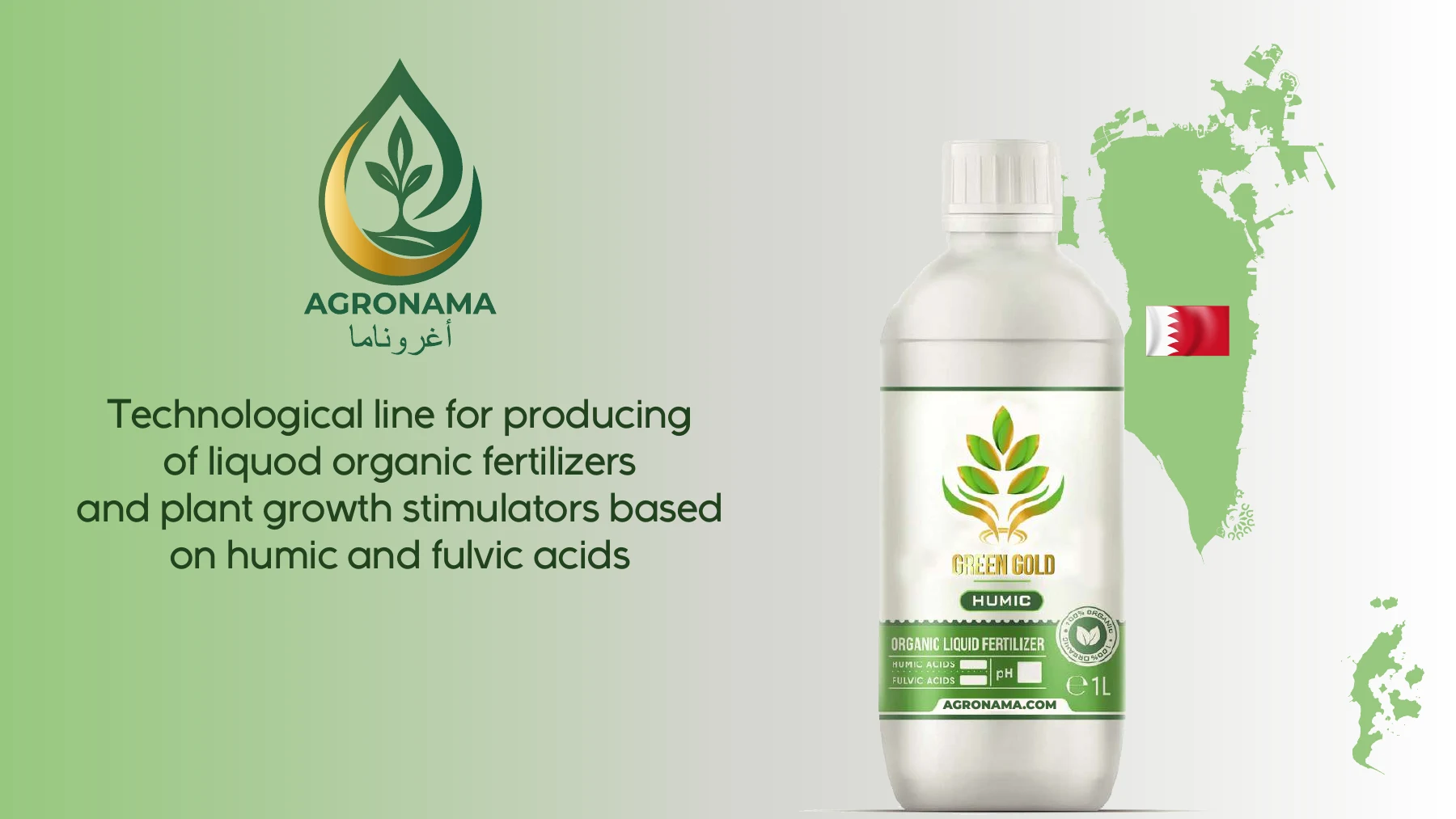
- Liquid organic fertilizers and plant growth stimulators based on humic and fulvic acids, presented under the AGRONAMA brand.
Original slide & reference text
Original English transcript
Technological line for producing
of liquod organic fertilizers
and plant growth stimulators based
on humic and fulvic acids
AGRONAMA.COM
CHAPTER 02
Benefits of the production project
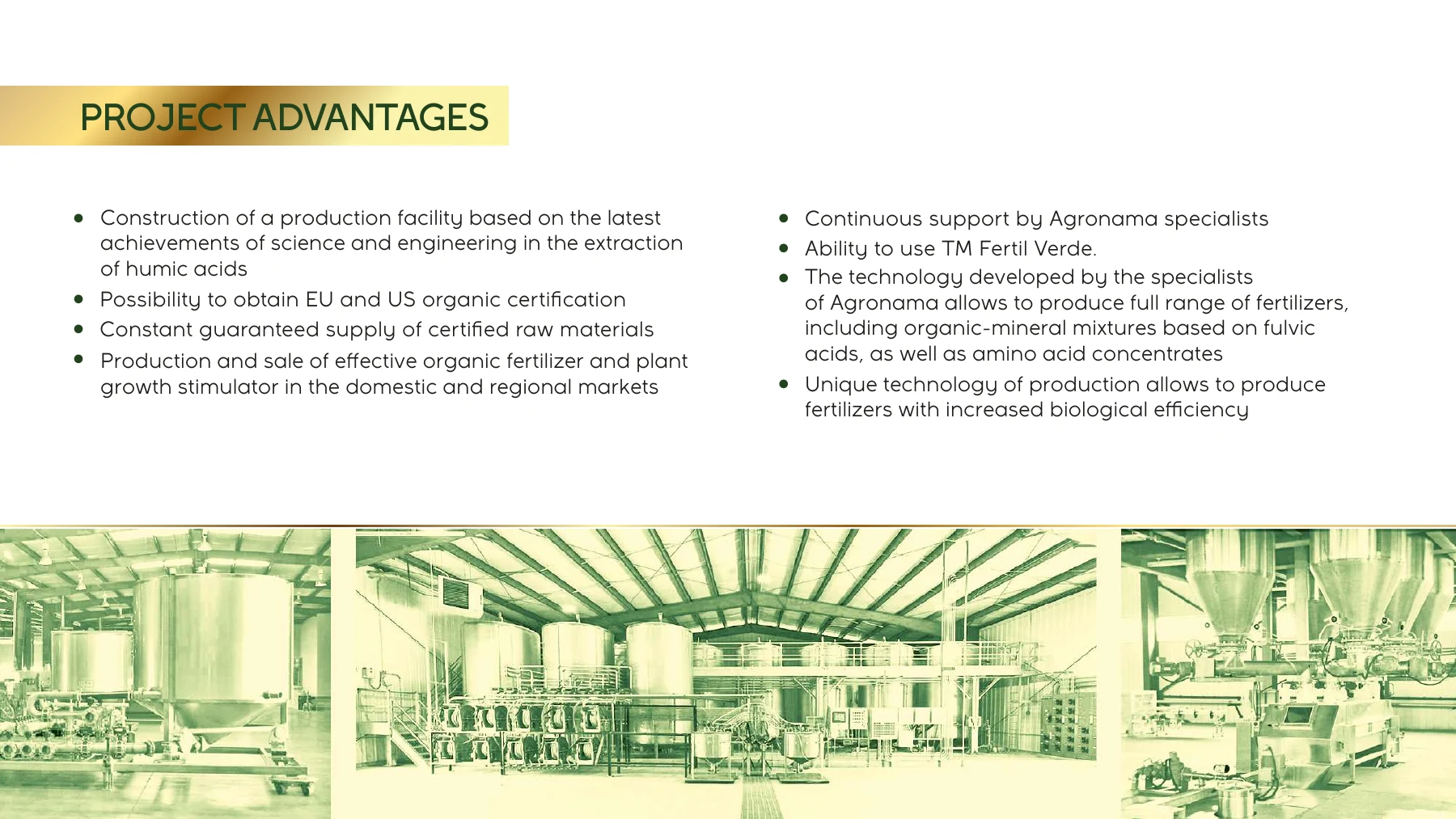
- Latest engineering for a humic-acid extraction factory.
- Possibility of EU and US organic certification.
- Constant, guaranteed supply of certified raw materials.
- Production and sale of effective organic fertilizers and growth stimulators for domestic and regional markets.
- Continuous support from AGRONAMA specialists.
- Use of the Fertil Verde trademark.
- A full range, including organic-mineral fulvic mixtures and amino-acid concentrates.
- Increased biological efficiency.
Certification is presented as a possibility, not evidence of an existing certificate. Supply and performance statements are source claims.
Original slide & reference text
Original English transcript
∞
 ∞ Possibility to obtain EU and US organic certification
 ∞ Constant guaranteed supply of certified raw materials
 ∞
 ∞ Continuous support by Agronama specialists
 ∞ Ability to use TM Fertil Verde.
 ∞
 ∞
PROJECT ADVANTAGES
Construction of a production facility based on the latest
achievements of science and engineering in the extraction
of humic acids
Production and sale of effective organic fertilizer and plant
growth stimulator in the domestic and regional markets
The technology developed by the specialists
of Agronama allows to produce full range of fertilizers,
including organic-mineral mixtures based on fulvic
acids, as well as amino acid concentrates
Unique technology of production allows to produce
fertilizers with increased biological efficiency
CHAPTER 03
Complete production equipment
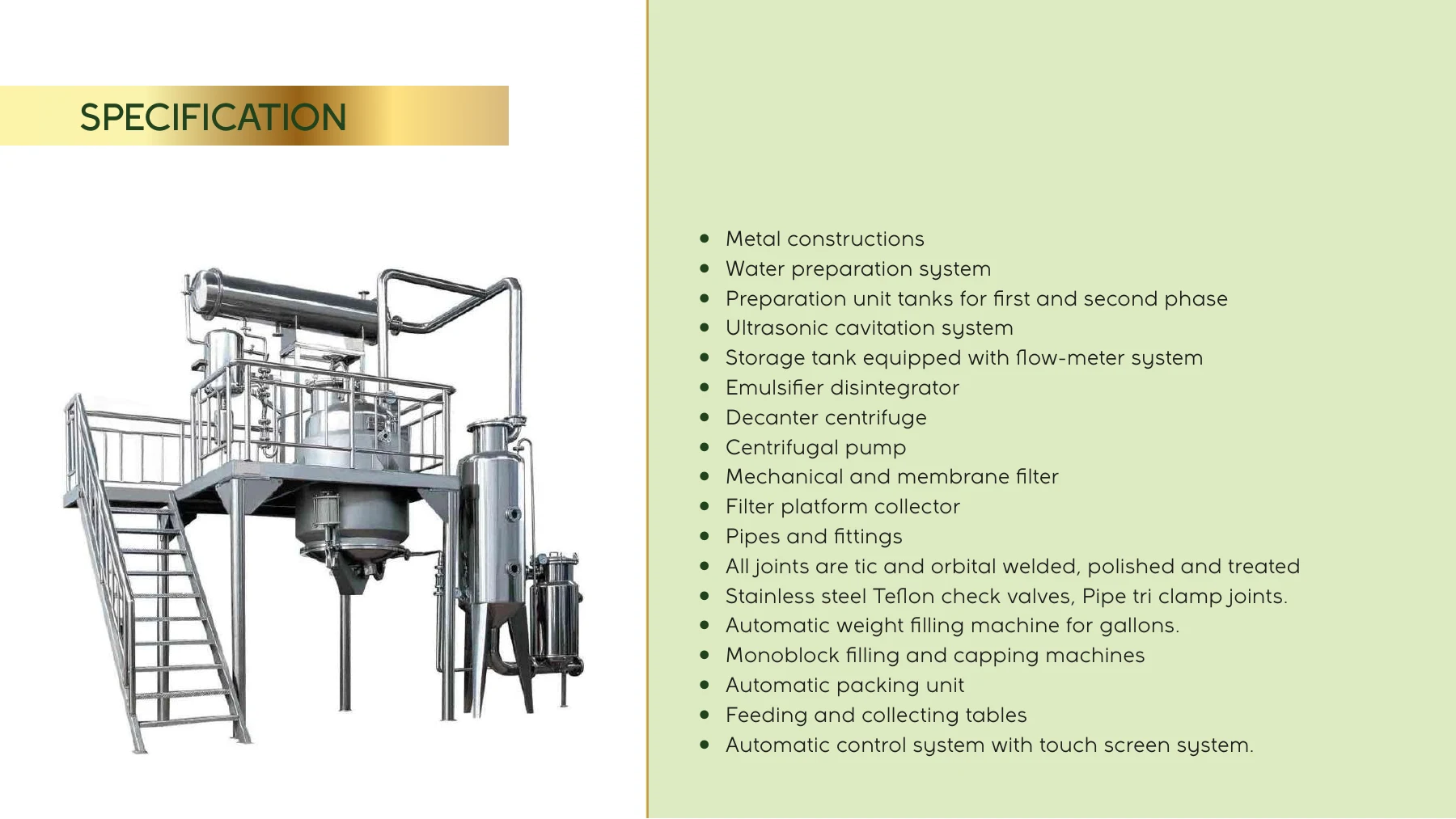
- Metal constructions.
- Water preparation.
- First- and second-phase preparation tanks.
- Ultrasonic cavitation.
- Storage tank with flowmeter.
- Emulsifier disintegrator.
- Decanter centrifuge.
- Centrifugal pump.
- Mechanical and membrane filter.
- Filter platform collector.
- Pipes and fittings.
- Welded, polished and treated joints, described as tic and orbital welding.
- Stainless-steel and Teflon check valves; Tri-clamp joints.
- Automatic weight-controlled gallon filling.
- Monoblock filling and capping.
- Automatic packing.
- Feeding and collecting tables.
- Touchscreen automated controls.
Original slide & reference text
Original English transcript
∞ Metal constructions
 ∞ Water preparation system
 ∞ Preparation unit tanks for first and second phase
 ∞ Ultrasonic cavitation system
 ∞ Storage tank equipped with flow-meter system
 ∞ Emulsifier disintegrator
 ∞ Decanter centrifuge
 ∞ Centrifugal pump
 ∞ Mechanical and membrane filter
 ∞ Filter platform collector
 ∞ Pipes and fittings
 ∞ All joints are tic and orbital welded, polished and treated
 ∞ Stainless steel Teflon check valves, Pipe tri clamp joints.
 ∞ Automatic weight filling machine for gallons.
 ∞ Monoblock filling and capping machines
 ∞ Automatic packing unit
 ∞ Feeding an d collecting tables
 ∞ Automatic control system with touch screen system.
SPECIFICATION
CHAPTER 04
Factory requirements
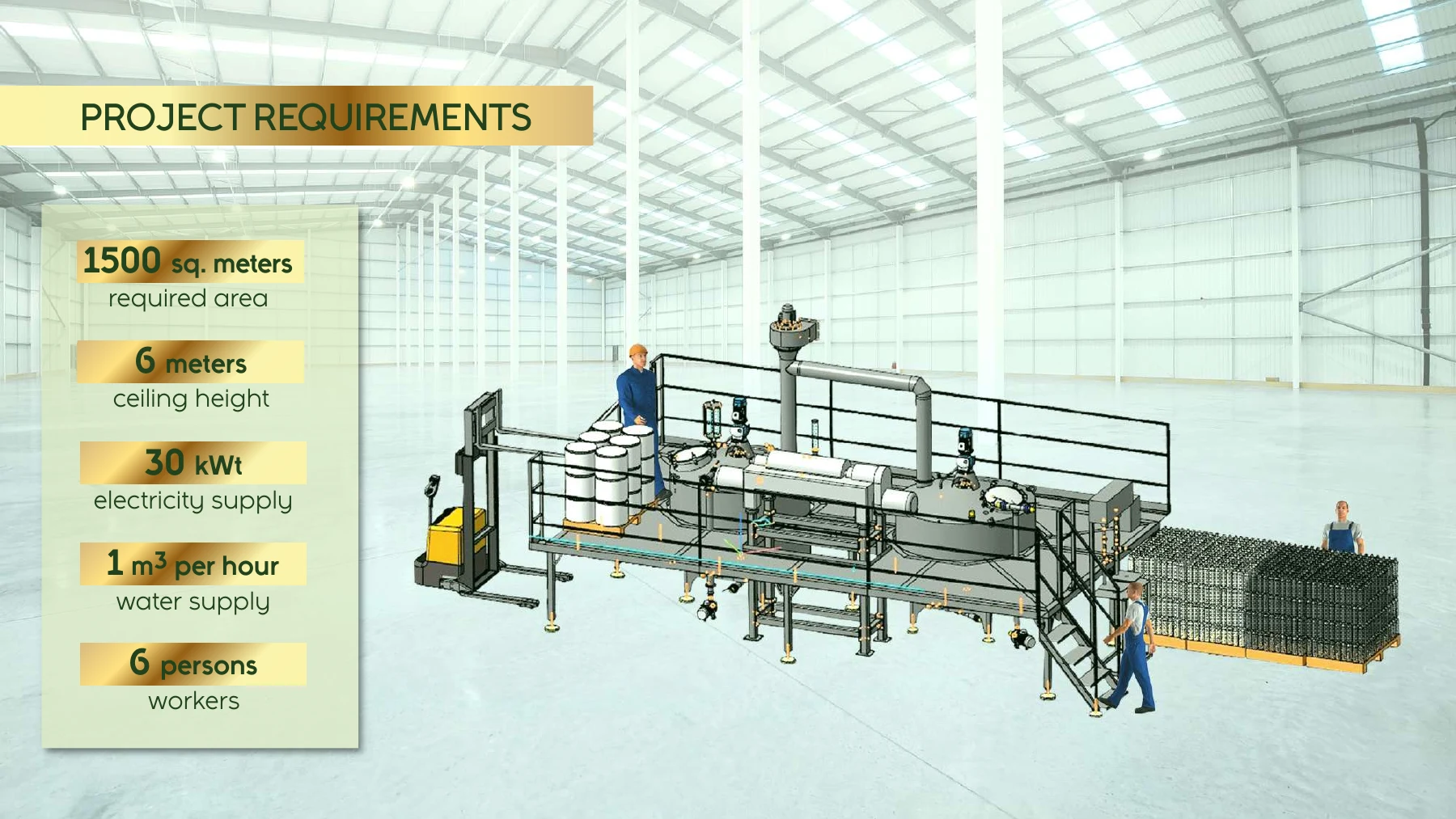
- The production line requires the space, staff and utilities below.
Facility parameters| Requirement | Value |
|---|
| Floor area | 1,500 m² |
|---|
| Height | 6 m |
|---|
| Staff | 6 people |
|---|
| Electrical power | 30 kW |
|---|
| Water | 1 m³/hour |
|---|
Original slide & reference text
Original English transcript
1500 sq. meters
required area
6 meters
ceiling height
6 persons
workers
30 kWt
electricity supply
1 m3 per hour
water supply
PROJECT REQUIREMENTS
CHAPTER 05
Cold-plasma water treatment
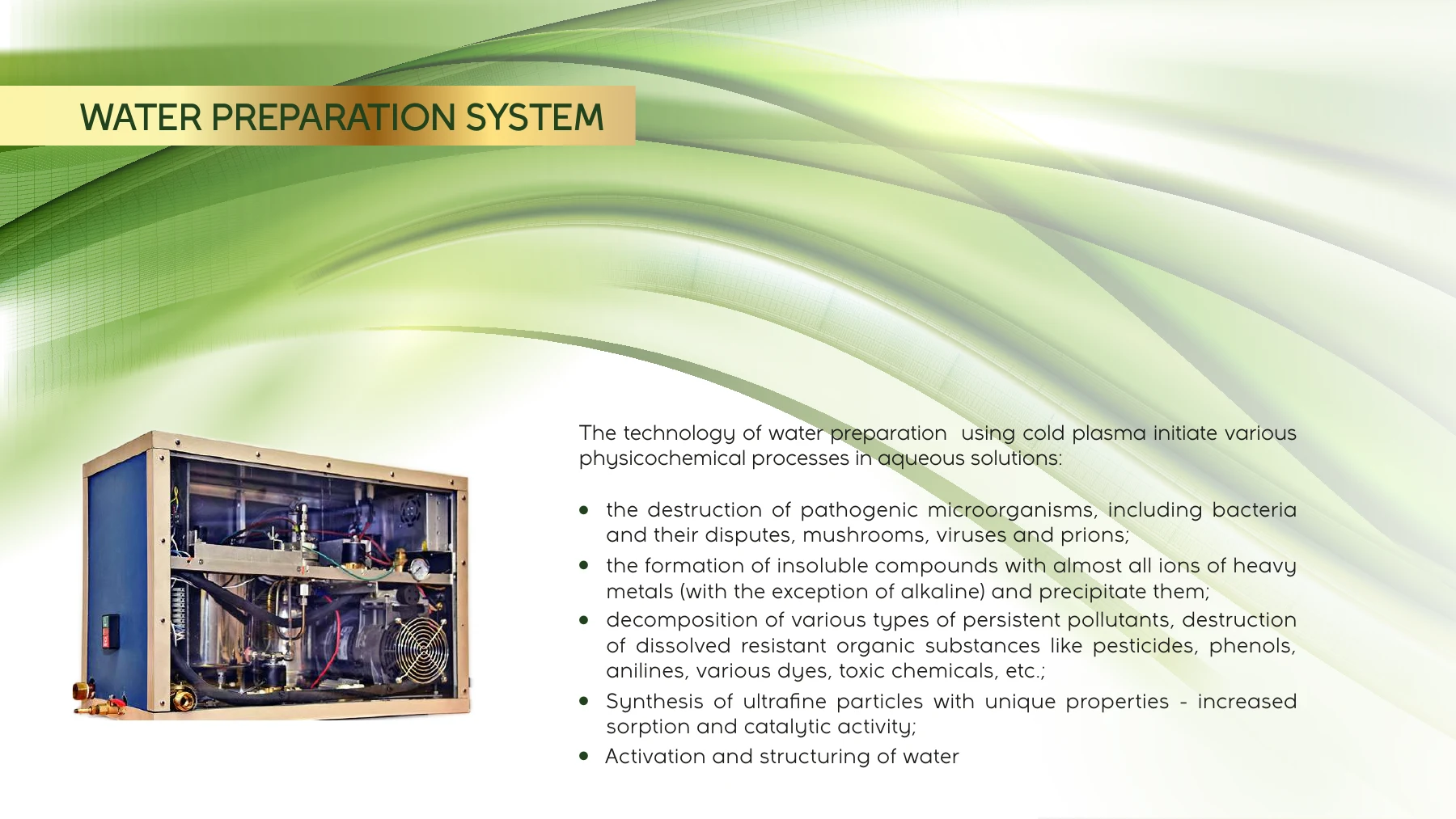
- The source describes physicochemical processes intended to destroy pathogens: bacteria, spores, fungi, viruses and prions.
- Formation of insoluble compounds from almost all heavy-metal ions, with an exception labelled alkaline in the source.
- Ultrafine particles with higher sorption and catalytic activity.
- Decomposition of persistent organic pollutants, pesticides, phenols, anilines, dyes and toxic chemicals.
- Water activation and structuring.
Source claims, not independently validated treatment guarantees. No trial conditions, treatment dose or regulatory approvals are supplied; alkaline is ambiguous.
Original slide & reference text
Original English transcript
WATER PREPARATION SYSTEM
∞
∞
∞
∞
∞ Activation and structuring of water
The technology of water preparation  using cold plasma initiate various
physicochemical processes in aqueous solutions:
the destruction of pathogenic microorganisms, including bacteria
and their disputes, mushrooms, viruses and prions;
the formation of insoluble compounds with almost all ions of heavy
metals (with the exception of alkaline) and precipitate them;
Synthesis of ultrafine particles with unique properties - increased
sorption and catalytic activity;
decompositio
n of various types of persistent pollutants, destruction
of dissolved resistant organic substances like pesticides, phenols,
anilines, various dyes, toxic chemicals, etc.;
CHAPTER 06
Plasma activation mechanism
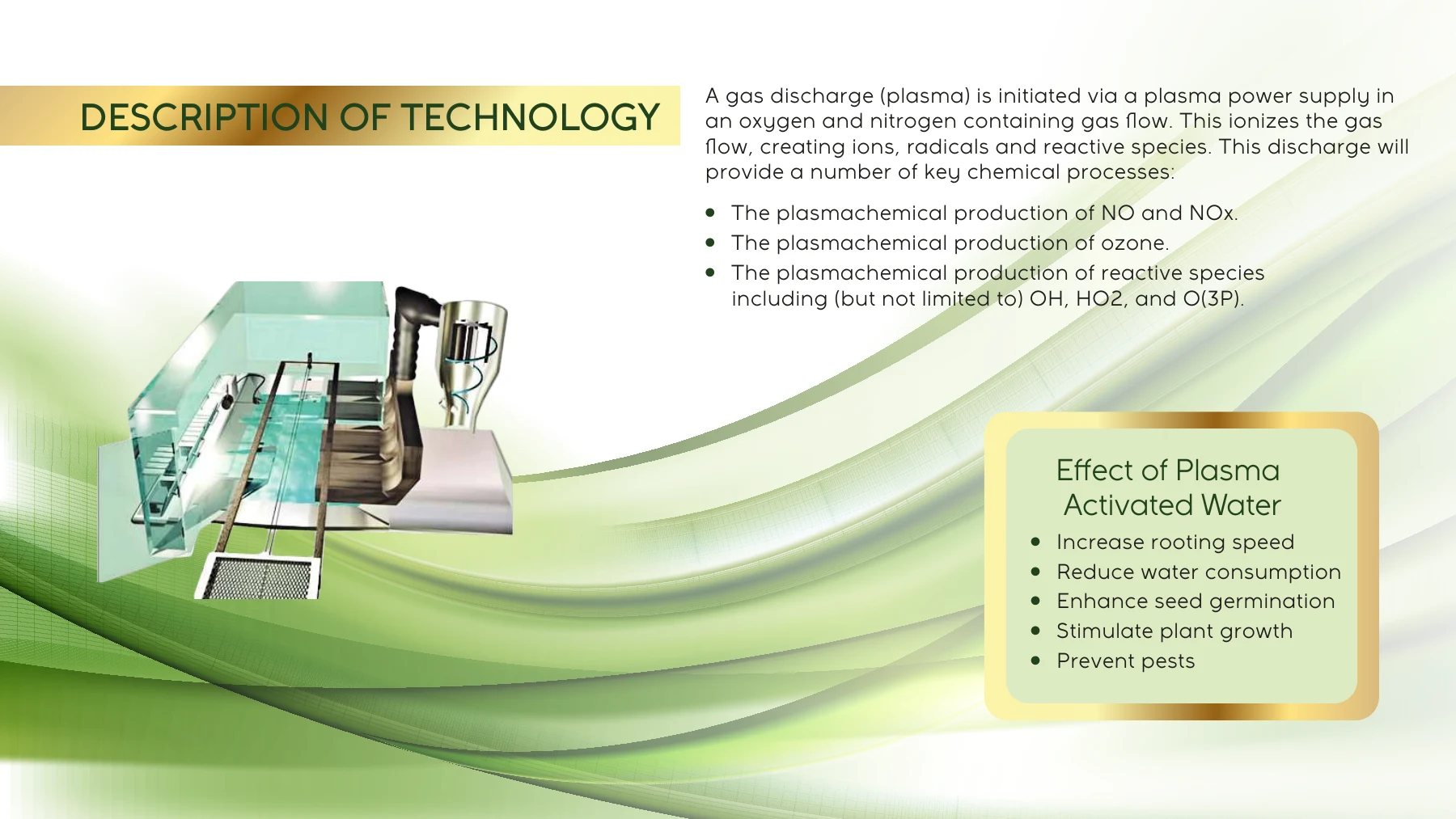
- Plasma power initiates a gas discharge involving oxygen and nitrogen.
- The diagram identifies ions, radicals and reactive species: NO, NOx, ozone, OH, HO₂ and O(³P).
- Claimed effects: faster roots, lower water use, improved germination and growth, and pest prevention.
Original slide & reference text
Original English transcript
∞ The plasmachemical production of NO and NOx.
 ∞ The plasmachemical production of ozone.
 ∞ The plasmachemical production of reactive species
including (but not limited to) OH, HO2, and O(3P).

 ∞ Increase rooting speed
 ∞ Reduce water consumption
 ∞ Enhance seed germination
 ∞ Stimulate plant growth
 ∞ Prevent pests
DESCRIPTION OF TECHNOLOGY
A gas discharge (plasma) is initiated via a plasma power supply in
an oxygen and nitrogen containing gas flow. This ionizes the gas
flow, creating ions, radicals and reactive species. This discharge will
provide a number of key chemical processes:
Effect of Plasma
 Activated Water
CHAPTER 07
Ultrasonic extraction
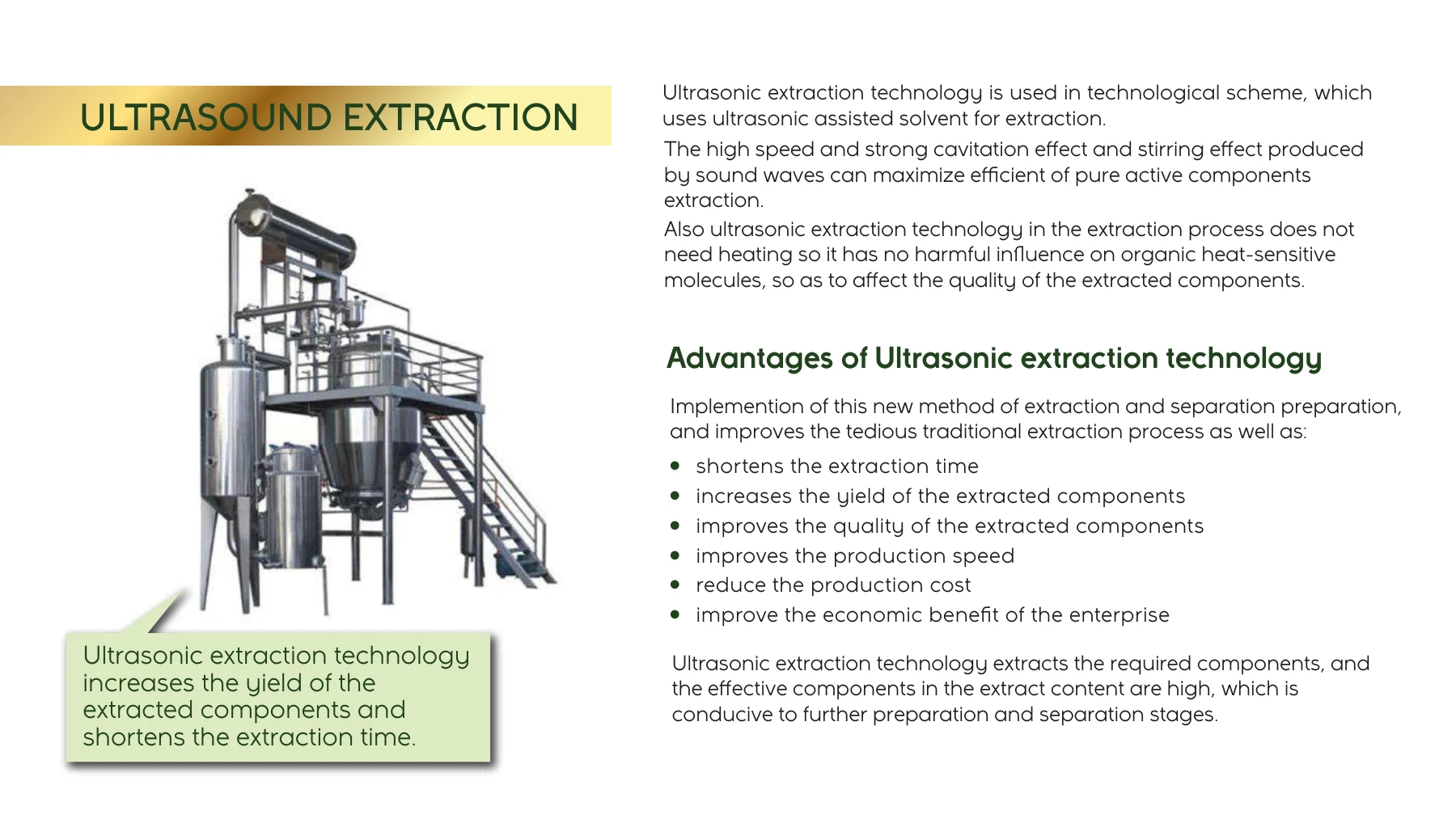
- Solvent-assisted extraction uses high-speed cavitation and stirring to extract active substances.
- No heating, preserving heat-sensitive compounds.
- High active-substance content facilitates preparation and separation.
- Shorter processing time, higher yield and quality, faster production, lower costs and improved economics.
Original slide & reference text
Original English transcript
∞ shortens the extraction time
 ∞ increases the yield of the extracted components
 ∞ improves the quality of the extracted components
 ∞ improves the production speed
 ∞ reduce the production cost
 ∞ improve the economic benefit of the enterprise
Advantages of Ultrasonic extraction technology
-
ULTRASOUND EXTRACTION
Ultrasonic extraction technology is used in technological scheme, which
uses ultrasonic assisted solvent for extraction.
Implemention of this new method of extraction and separation preparation,
and improves the tedious traditional extraction process as well as:
The high speed and strong cavitation effect and stirring effect produced
by sound waves can maximize efficient of pure active components
extraction.
Also ultrasonic extraction technology in the extraction process does not
need heating so it has no harmful influence on organic heat-sensitive
molecules, so as to affect the quality of the extracted components.
Ultrasonic extraction technology extracts the required components, and
the effective components in the extract content are high, which is
conducive to further preparation and separation stages.
Ultrasonic extraction technology
increases the yield of the
extracted components and
shortens the extraction time.
CHAPTER 08
Decanter separation
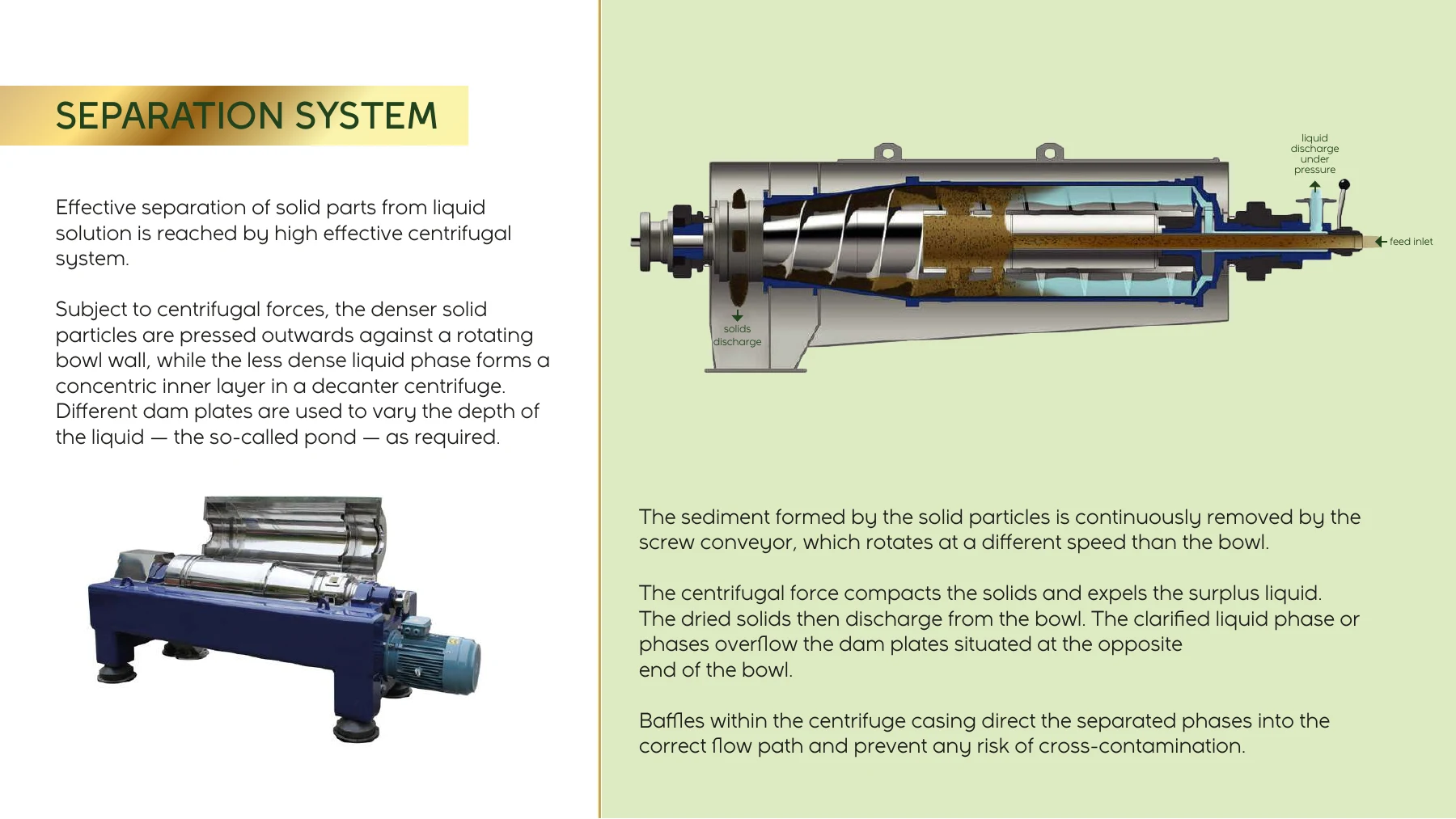
- The rotating bowl moves denser solids outward while lighter liquid forms an inner layer.
- Dam plates vary the liquid pond depth.
- A screw conveyor rotating at a different speed removes sediment.
- Solids are compacted, excess liquid is expelled and dried solids are discharged.
- Clarified liquid overflows dam plates at the opposite end.
- Baffles and flow paths are intended to prevent cross-contamination.
- Diagram labels: inlet, solids outlet and liquid pressure outlet.
Original slide & reference text
Original English transcript
solids
discharge
feed inlet
liquid
discharge
under
pressure
SEPARATION SYSTEM
The sediment formed by the solid particles is continuously removed by the
screw conveyor, which rotates at a different speed than the bowl.
The centrifugal force compacts the solids and expels the surplus liquid.
The dried solids then discharge from the bowl. The clarified liquid phase or
phases overflow the dam plates situated at the opposite
end of the bowl.
Baffles within the centrifuge casing direct the separated phases into the
correct flow path and prevent any risk of cross-contamination.
Effective separation of solid parts from liquid
solution is reached by high effective centrifugal
system.
Subject to centrifugal forces, the denser solid
particles are pressed outwards against a rotating
bowl wall, while the less dense liquid phase forms a
concentric inner layer in a decanter centrifuge.
Different dam plates are used to vary the depth of
the liquid — the so-called pond — as required.
CHAPTER 09
Stainless-steel engineering
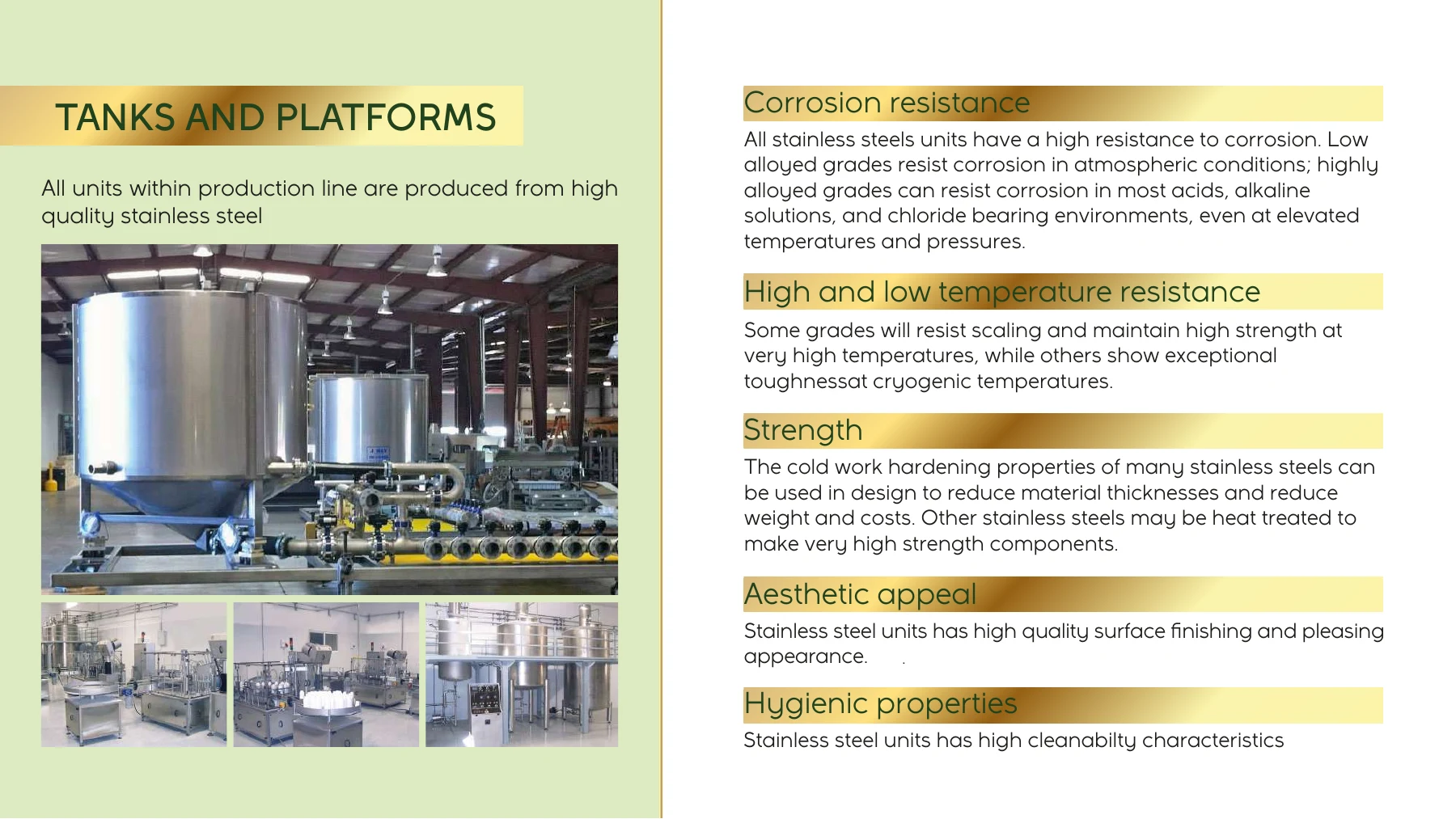
- All equipment is specified as high-quality stainless steel.
- Corrosion resistance: low-alloy grades resist atmospheric conditions; highly alloyed grades resist acids, alkaline solutions and chlorides, including at high temperatures.
- Temperature resistance: suitable grades resist scaling and retain strength at high temperatures; others remain tough at cryogenic temperatures.
- Cold-work hardening allows thinner, lighter components and lower costs; heat treatment can increase strength.
- Hygiene: easy-to-clean surfaces.
- Aesthetics: attractive surface finish.
Original slide & reference text
Original English transcript
Corrosion resistance
High and low temperature resistance
Strength
Aesthetic appeal
.
Hygienic properties
Stainless steel units has high cleanabilty characteristics
TANKS AND PLATFORMS
All units within production line are produced from high
quality stainless steel
All stainless steels units have a high resistance to corrosion. Low
alloyed grades resist corrosion in atmospheric conditions; highly
alloyed grades can resist corrosion in most acids, alkaline
solutions, and chloride bearing environments, even at elevated
temperatures and pressures.
Some grades will resist scaling and maintain high strength at
very high temperatures, while others show exceptional
toughnessat cryogenic temperatures.
The cold work hardening properties of many stainless steels can
be used in design to reduce material thicknesses and reduce
weight and costs. Other stainless steels may be heat treated to
make very high strength components.
Stainless steel units has high quality surface finishing and pleasing
appearance.
CHAPTER 10
Automation and monitoring
- Feedback control throughout the production cycle.
- Monitoring of the main process indicators.
- Surveillance and control of safe operating conditions.
- All information displayed on computers.
Original slide & reference text

Original English transcript
All indicators are displayed
on computer system monitors

AUTOMATIC CONTROL SYSTEM
Our automation systems provide reliable status feedback throughout
the production cycle, operative monitoring and control of main
production indicators.
Our control units provide exceptional surveillance and control of the
fertilizers production process.
The control units have well-proven features designed to ensure
maximum safety during production, regardless of conditions.
CHAPTER 11
Filling and packaging
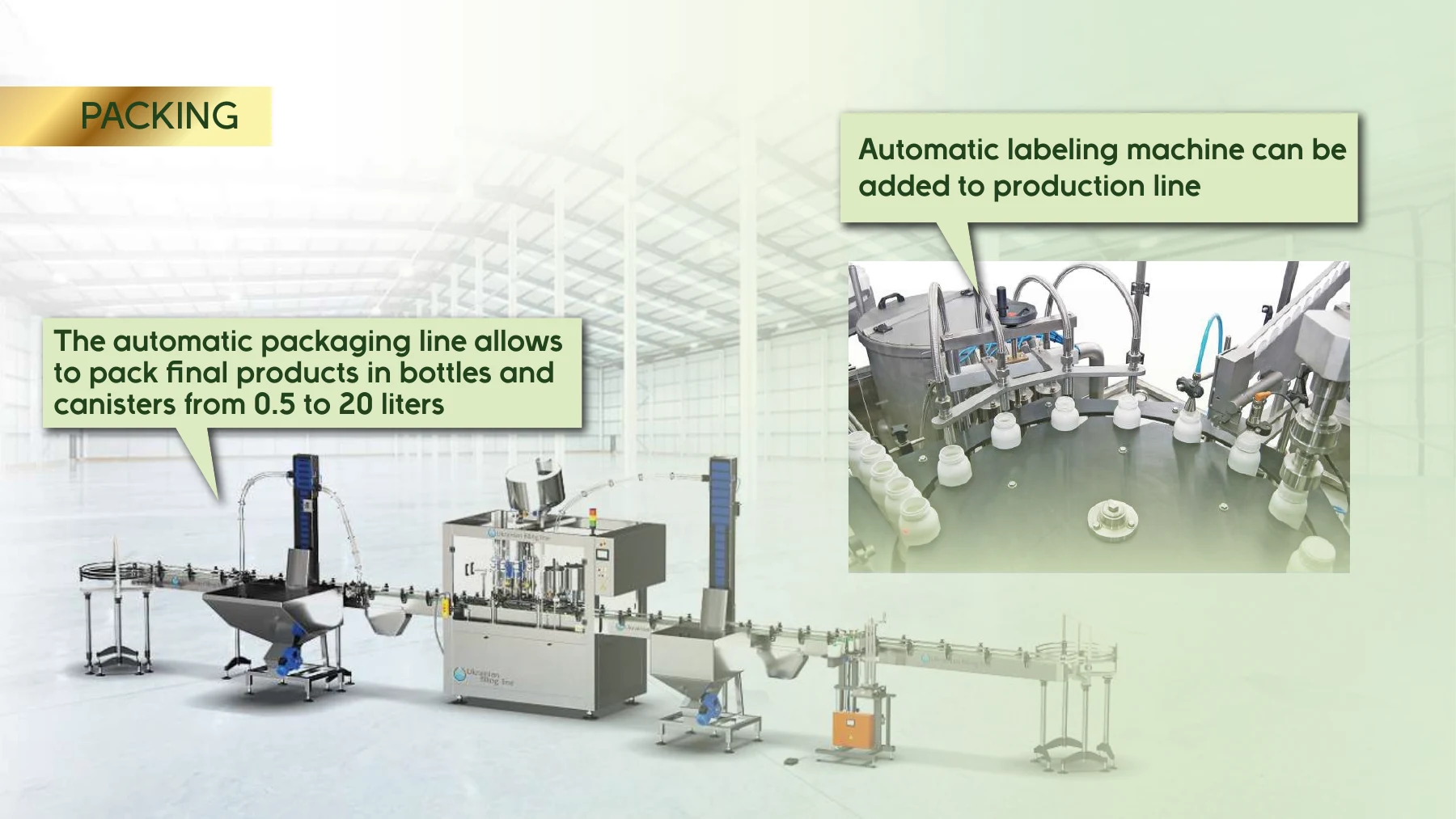
- Automatic filling of bottles and canisters from 0.5 to 20 litres.
- An optional labelling machine can be added.
Original slide & reference text
Original English transcript
Automatic labeling machine can be
added to production line
The automatic packaging line allows
to pack final products in bottles and
canisters from 0.5 to 20 liters
PACKING
CHAPTER 12
Humic and fulvic acids in agriculture
- Section introduction: humic and fulvic acids in agriculture, with organic plant-nutrition imagery.
Original slide & reference text
Original English transcript
Humic and fulvic
acids in agriculture
AGRONAMA.COM
CHAPTER 13
Middle East organic market
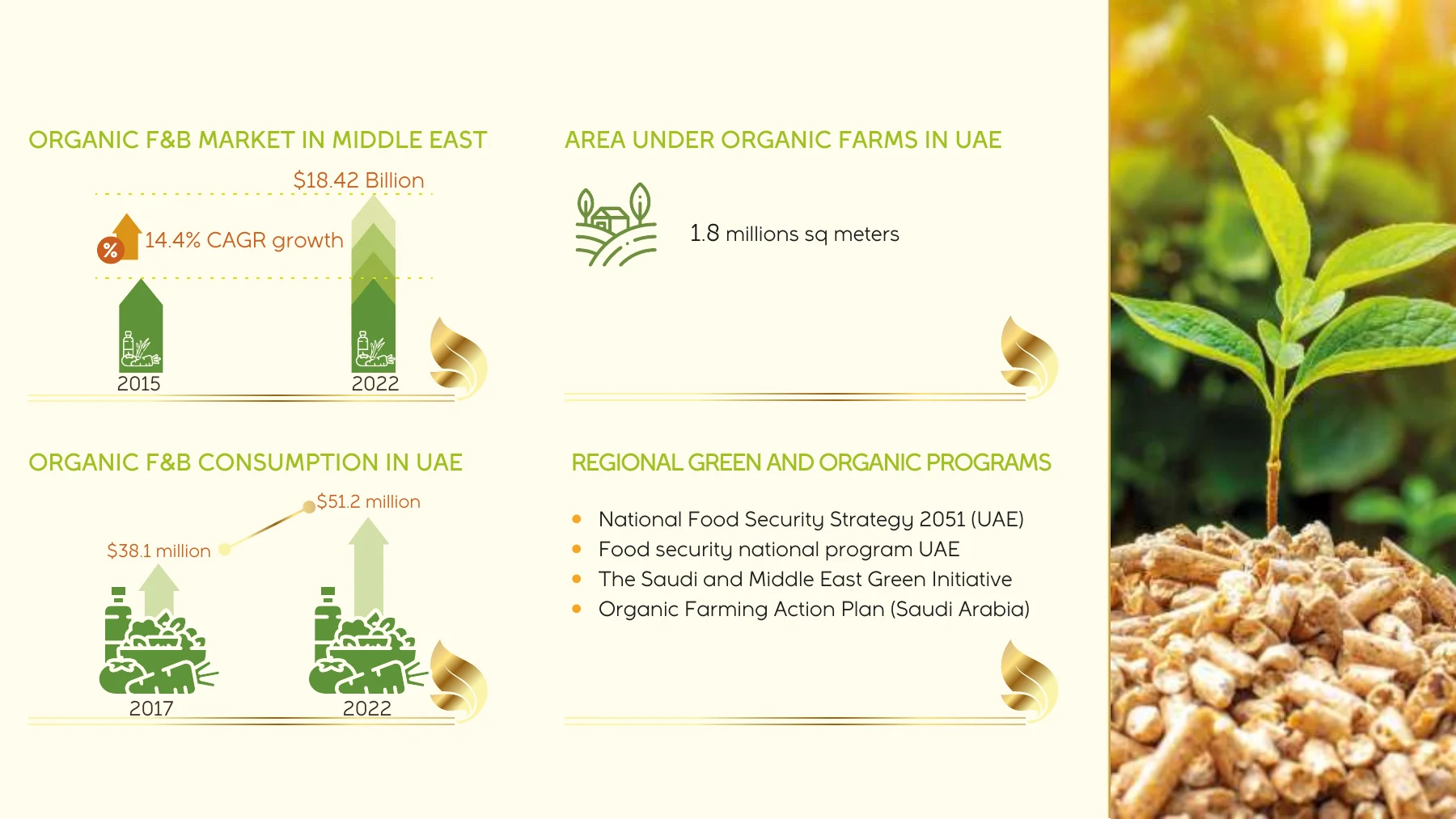
- The presentation reports a Middle East organic food and beverage market of USD 18.42 billion in 2022, with 14.4% CAGR over 2015–2022.
- UAE organic-market value: USD 38.1 million in 2017 and USD 51.2 million in 2022.
- Organic farms cover 1.8 million m² according to the source.
- Policy drivers: UAE National Food Security Strategy 2051; UAE national food security; Saudi Green Initiative and Middle East Green Initiative; Saudi Organic Farming Action Plan.
UAE organic market| Year | USD million |
|---|
| 2017 | 38.1 |
|---|
| 2022 | 51.2 |
|---|
Historical source figures; underlying datasets are not supplied. No observed 2015 market value is given.
Original slide & reference text
Original English transcript
ORGANIC F&B MARKET IN MIDDLE EAST
ORGANIC F&B CONSUMPTION IN UAE REGIONAL GREEN AND ORGANIC PROGRAMS
 ∞ National Food Security Strategy 2051 (UAE)
 ∞ Food security national program UAE
 ∞ The Saudi and Middle East Green Initiative
 ∞ Organic Farming Action Plan (Saudi Arabia)
2015
$18.42 Billion
14.4% CAGR growth
2022
2017
$38.1 million
$51.2 million
2022
AREA UNDER ORGANIC FARMS IN UAE
1.8 millions sq meters
CHAPTER 14
Extraction and soil functions
- The source reiterates shorter extraction time, higher yield and quality, faster production, lower cost and improved economics.
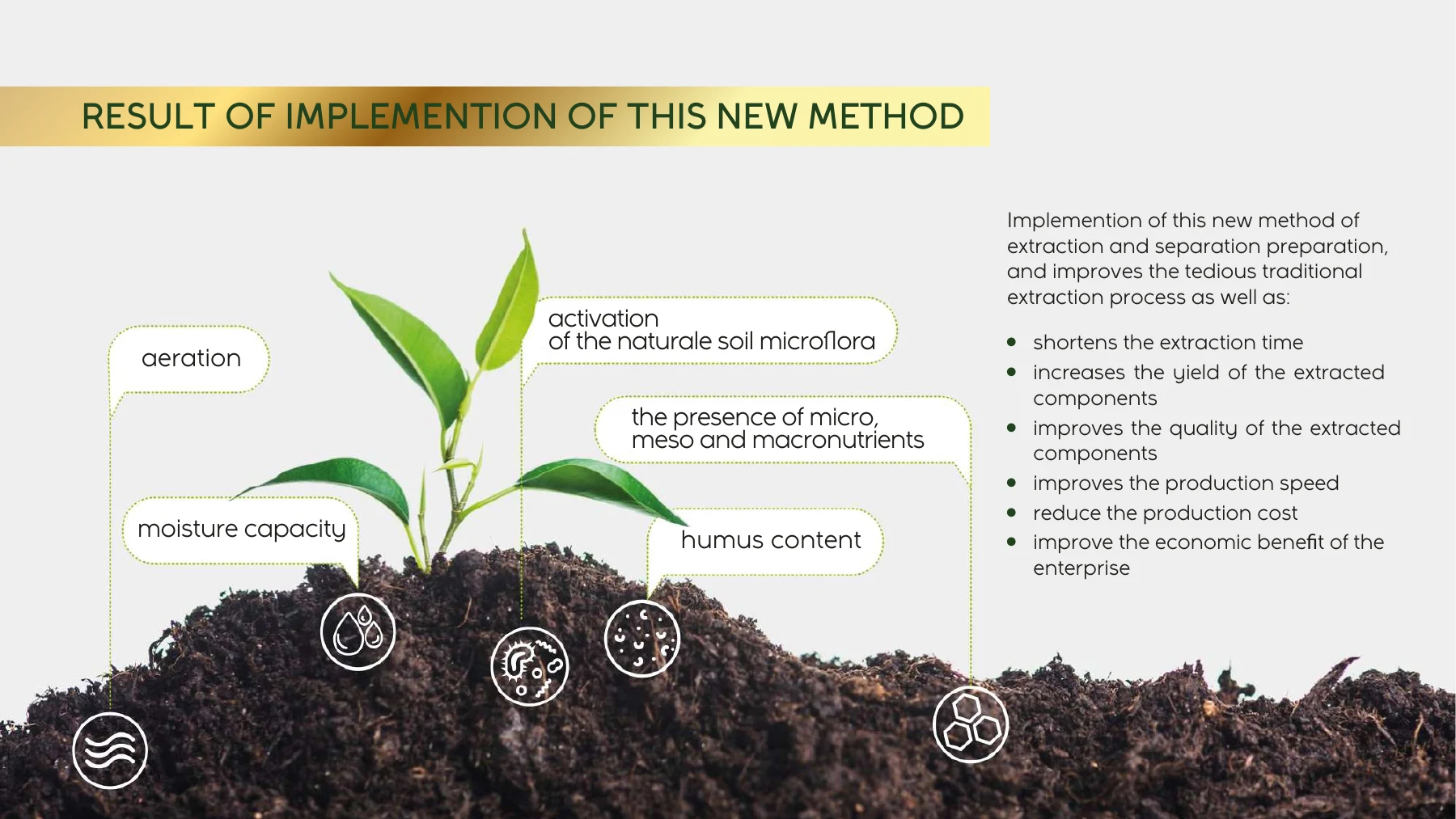
- The soil diagram links humic inputs to aeration, humus, activation of natural microflora, micro-, meso- and macronutrients, and moisture capacity.
Original slide & reference text
Original English transcript
∞ shortens the extraction time
 ∞ increases the yield of the extracted
components
 ∞ improves the quality of the extracted
components
 ∞ improves the production speed
 ∞ reduce the production cost
 ∞ improve the economic benefit of the
enterprise
RESULT OF IMPLEMENTION OF THIS NEW METHOD
Implemention of this new method of
extraction and separation preparation,
and improves the tedious traditional
extraction process as well as:
aeration
humus content
activation
of the naturale soil microflora
the presence of micro,
meso and macronutrients
moisture capacity
CHAPTER 15
Physical effects of humic acids
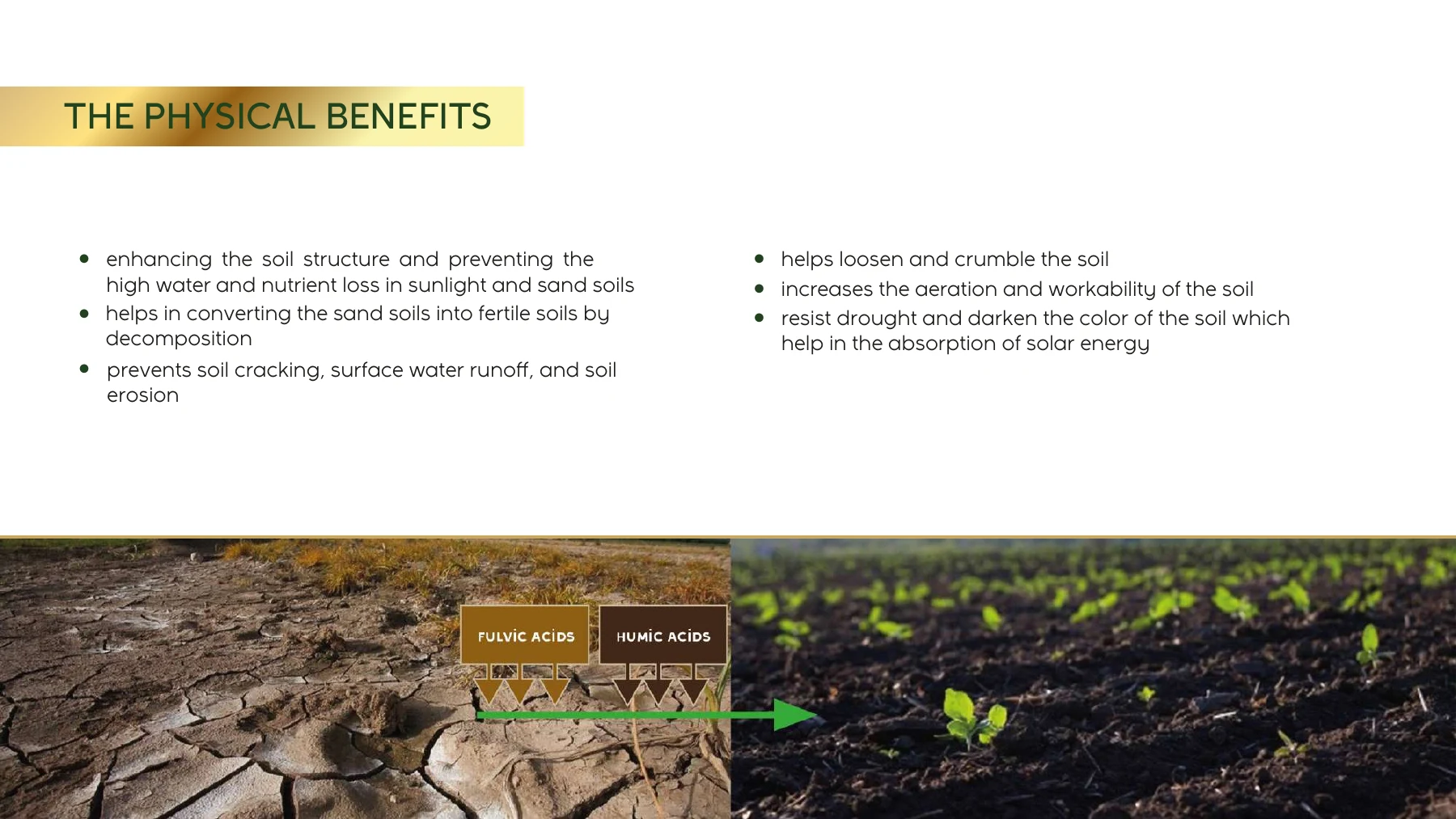
- Improve soil structure and reduce water and nutrient loss in light, sandy soils.
- Increase drought resistance; darken soil and improve absorption of solar energy.
- Help transform sandy soil into fertile soil through decomposition.
- Loosen and crumble soil.
- Improve aeration and workability.
- Prevent soil cracking, surface runoff and erosion.
Original slide & reference text
Original English transcript
∞
 ∞
 ∞
 ∞ helps loosen and crumble the soil
 ∞ increases the aeration and workability of the soil
 ∞
THE PHYSICAL BENEFITS
enhancing the soil structure and preventing the
high water and nutrient loss in sunlight and sand soils
resist drought and darken the color of the soil which
help in the absorption of solar energy
helps in converting the sand soils into fertile soils by
decomposition
prevents soil cracking, surface water runoff, and soil
erosion
CHAPTER 16
Chemical and biological effects
- Neutralise acidic and alkaline soils, regulate salts and pH.
- Improve absorption of organic and mineral nutrients.
- Retain water-soluble inorganic fertilizers.
- Improve nitrogen and nutrient uptake.
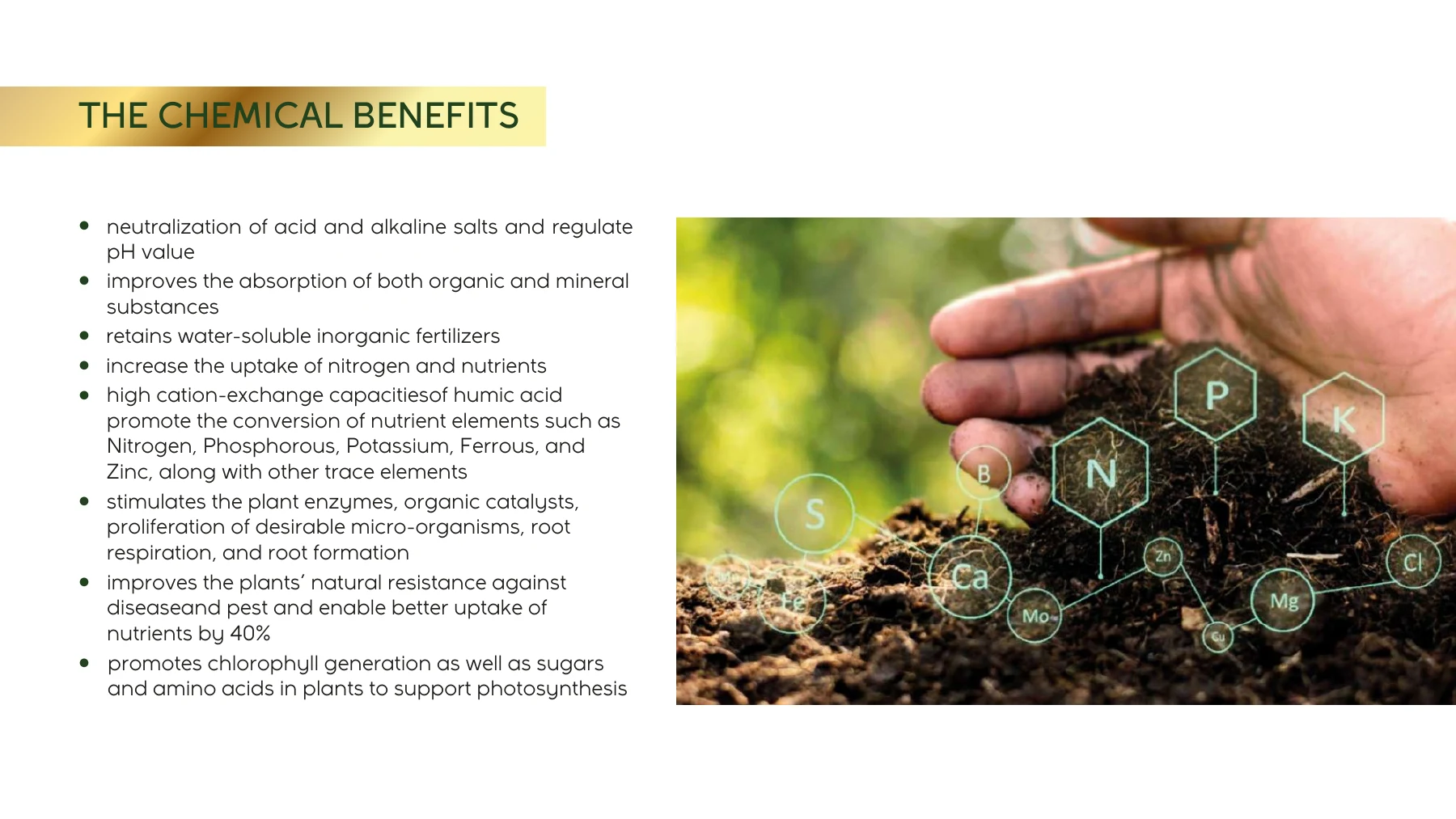
- Increase cation-exchange capacity and promote uptake of nitrogen, phosphorus, potassium, iron, zinc and trace elements.
- Support enzymes as organic catalysts, beneficial microorganisms, root respiration and root formation.
- Improve disease and pest resistance; claimed nutrient-uptake increase of 40%.
- Promote chlorophyll, sugars and amino acids, supporting photosynthesis.
The 40% claim has no stated trial protocol, crop or comparator. It is not a guaranteed product outcome.
Original slide & reference text
Original English transcript
∞
 ∞
 ∞ retains water-soluble inorganic fertilizers
 ∞ increase the uptake of nitrogen and nutrients
 ∞
 ∞
 ∞
 ∞
THE CHEMICAL BENEFITS
neutralization of acid and alkaline salts and regulate
pH value
improves the absorption of both organic and mineral
substances
high cation-exchange capacitiesof humic acid
promote the conversion of nutrient elements such as
Nitrogen, Phosphorous, Potassium, Ferrous, and
Zinc, along with other trace elements
stimulates the plant enzymes, organic catalysts,
proliferation of desirable micro-organisms, root
respiration, and root formation
improves the plants’ natural resistance against
diseaseand pest and enable better uptake of
nutrients by 40%
promotes chlorophyll generation as well as sugars
and amino acids in plants to support photosynthesis
CHAPTER 17
Complete plant-nutrition complex
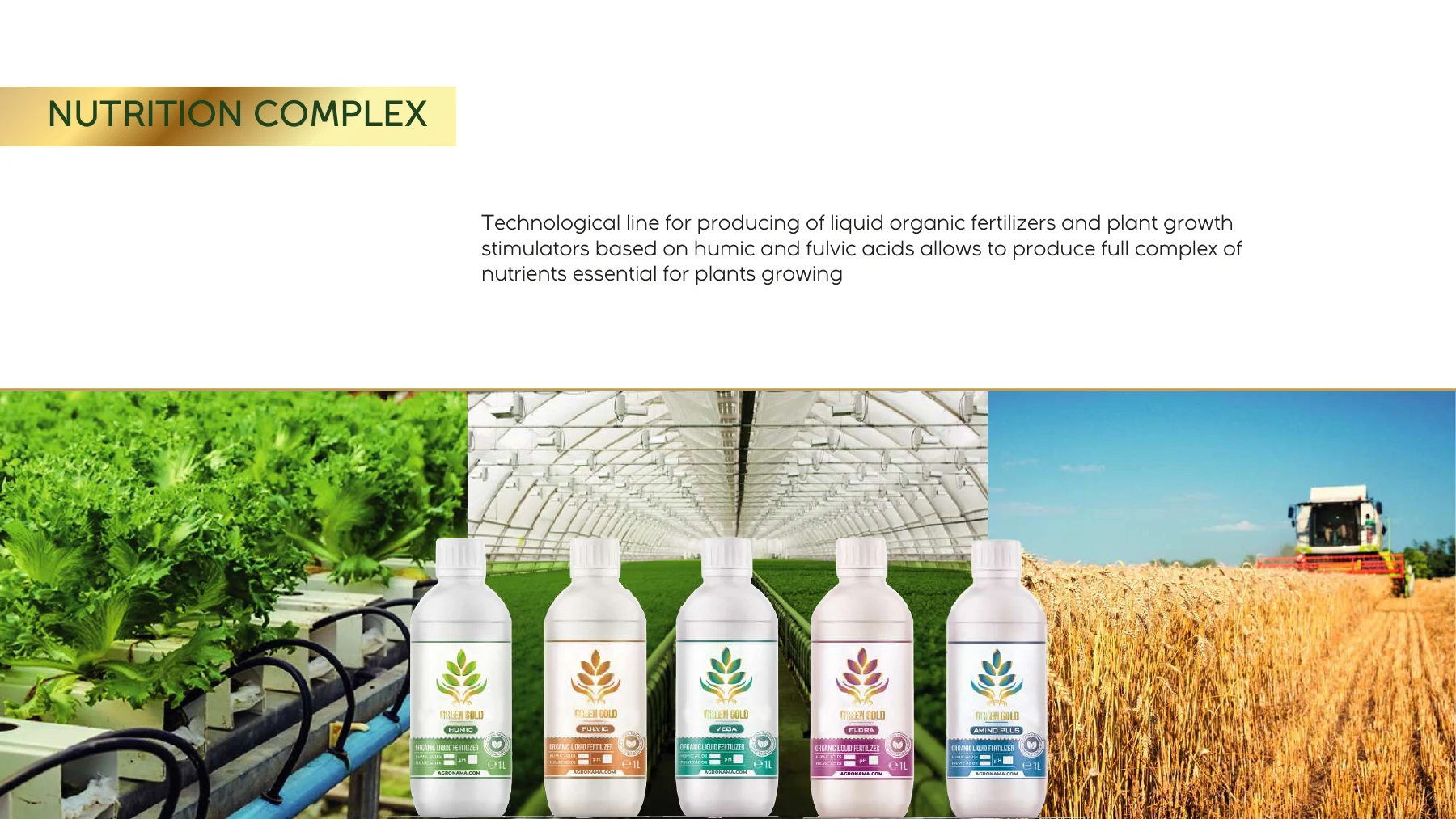
- Fertil Verde Humic, Fulvic, Vega, Flora and Amino Plus.
- The range is presented as supplying a complete complex of essential plant nutrients.
- The supplied packaging images also bear Green Gold branding.
Packaging reproduced from the presentation; no new formulation or certification is inferred.
Original slide & reference text
Original English transcript
NUTRITION COMPLEX
Technological line for producing of liquid organic fertilizers and plant growth
stimulators based on humic and fulvic acids allows to produce full complex of
nutrients essential for plants growing
AGRONAMA.COM AGRONAMA.COM AGRONAMA.COM AGRONAMA.COM AGRONAMA.COM
CHAPTER 18
Fertil Verde dosage reference
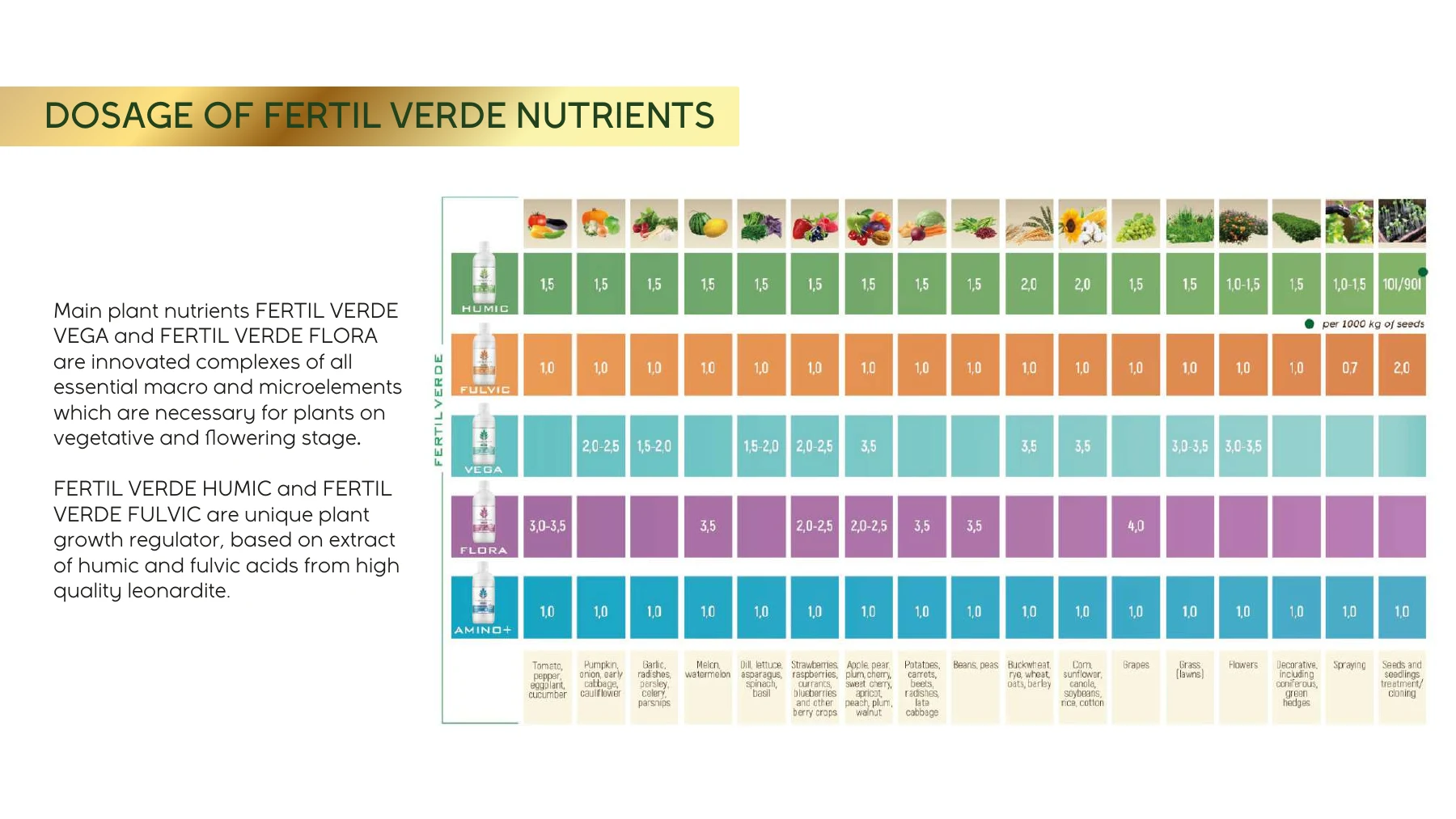
- Vega and Flora provide macro- and micronutrients for vegetative growth and flowering.
- Humic and Fulvic are growth regulators from high-grade leonardite.
- All crop groups and values in the source dosage table are reproduced below.
- Humic seed-treatment footnote: 10 litres in 90 litres of water for 1,000 kg of seeds.
Source dosage table — units unspecified| Crop / application | Humic | Fulvic | Vega | Flora | Amino Plus |
|---|
| Tomato, pepper, eggplant, cucumber | 1.5 | 1.0 | — | 3.0–3.5 | 1.0 |
|---|
| Pumpkin, onion, early cabbage, cauliflower | 1.5 | 1.0 | 2.0–2.5 | — | 1.0 |
|---|
| Garlic, radishes, parsley, celery, parsnips | 1.5 | 1.0 | 1.5–2.0 | — | 1.0 |
|---|
| Melon, watermelon | 1.5 | 1.0 | — | 3.5 | 1.0 |
|---|
| Dill, lettuce, asparagus, spinach, basil | 1.5 | 1.0 | 1.5–2.0 | — | 1.0 |
|---|
| Strawberries, raspberries, currants, blueberries and other berries | 1.5 | 1.0 | 2.0–2.5 | 2.0–2.5 | 1.0 |
|---|
| Apple, pear, plum, cherry, sweet cherry, apricot, peach, walnut | 1.5 | 1.0 | 3.5 | 2.0–2.5 | 1.0 |
|---|
| Potatoes, carrots, beets, radishes, late cabbage | 1.5 | 1.0 | — | 3.5 | 1.0 |
|---|
| Beans, peas | 1.5 | 1.0 | — | 3.5 | 1.0 |
|---|
| Buckwheat, rye, wheat, oats, barley | 2.0 | 1.0 | 3.5 | — | 1.0 |
|---|
| Corn, sunflower, canola, soybeans, rice, cotton | 2.0 | 1.0 | 3.5 | — | 1.0 |
|---|
| Grapes | 1.5 | 1.0 | — | 4.0 | 1.0 |
|---|
| Grass, lawns | 1.5 | 1.0 | 3.0–3.5 | — | 1.0 |
|---|
| Flowers | 1.0–1.5 | 1.0 | 3.0–3.5 | — | 1.0 |
|---|
| Decorative plants, conifers, green hedges | 1.5 | 1.0 | — | — | 1.0 |
|---|
| Spraying | 1.0–1.5 | 0.7 | — | — | 1.0 |
|---|
| Seed/seedling treatment and cloning | 10 l / 90 l* | 2.0 | — | — | 1.0 |
|---|
Units and application basis for the general table are not specified. Values are a transcription, not an application recommendation. A dash means unspecified, not zero. Confirm directions before use.
Original slide & reference text
Original English transcript
DOSAGE OF FERTIL VERDE NUTRIENTS
Main plant nutrients FERTIL VERDE
VEGA and FERTIL VERDE FLORA
are innovated complexes of all
essential macro and microelements
which are necessary for plants on
vegetative and flowering stage.
FERTIL VERDE HUMIC and FERTIL
VERDE FULVIC are unique plant
growth regulator, based on extract
of humic and fulvic acids from high
quality leonardite.
 AGRONAMA